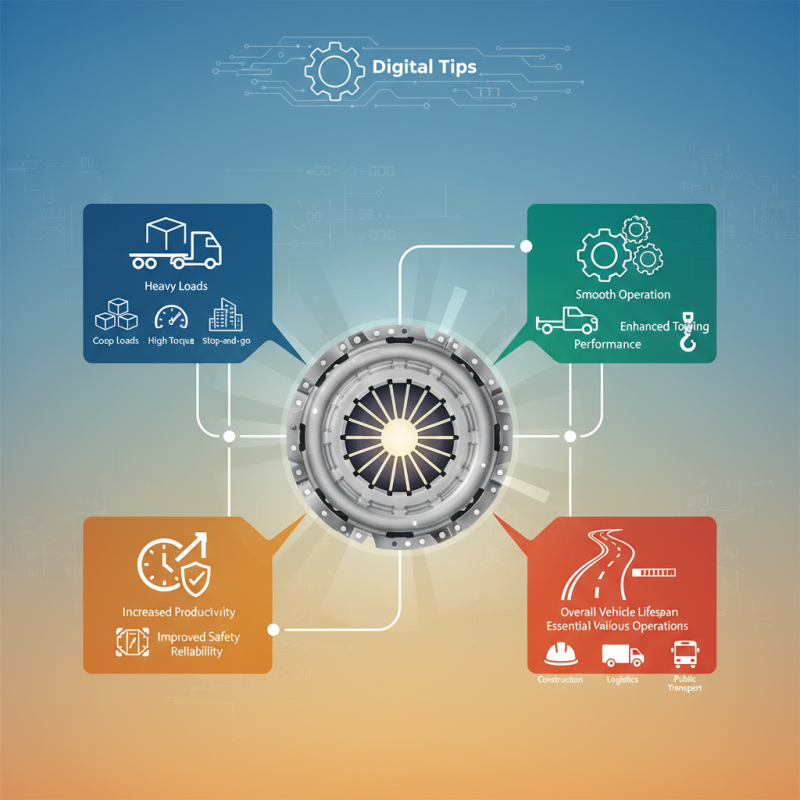
In the world of commercial vehicles, durability is key. This is where the heavy-duty clutch comes in. Many may wonder, "Why is heavy duty clutch used in commercial vehicles?" The answer lies in its ability to withstand extreme conditions. These clutches are designed for heavy loads, high torque, and constant stop-and-go driving, often seen in urban settings.
Heavy-duty clutches ensure smooth operation, minimizing wear and tear on the vehicle's drivetrain. They enhance vehicle performance, especially during challenging tasks like towing. A reliable clutch can make a significant difference in productivity and safety. However, not every clutch meets the rigorous standards required by commercial applications.
Using a heavy-duty clutch is not just a technical choice; it reflects an understanding of real-world challenges. Every delivery or transport operation demands reliability. The performance of these clutches can impact overall vehicle lifespan. Evaluating the right clutch means considering the specific needs of your operations. In the end, whether in construction, logistics, or public transport, the significance of a heavy-duty clutch cannot be overstated.
Importance of Clutch Systems in Commercial Vehicles
The clutch system in commercial vehicles plays a critical role in enhancing performance. Clutches need to handle high torque loads. According to industry reports, heavy-duty clutches can withstand up to 2,000 Nm of torque. This capacity ensures better power transfer, especially for trucks and buses that carry heavy loads. A robust clutch system prevents slippage, wear, and tear on the drivetrain.
Many operators underestimate maintenance needs. Regular checks can prevent costly downtime. A well-tuned clutch system can improve fuel efficiency by nearly 10%. Carrier fleets should monitor their clutch health closely, as delays in maintenance can lead to unexpected failures and repairs.
Tip: Regularly inspect hydraulic systems. Small leaks can indicate wear. Addressing these issues proactively can save resources in the long run. Understanding operational demands helps in choosing the right clutch. Each vehicle has unique requirements, and selecting the suitable system is crucial.
Differences Between Heavy Duty and Standard Clutches
Heavy-duty clutches and standard clutches differ significantly in their design and performance. Heavy-duty clutches are engineered to endure higher torque, which is essential for commercial vehicles that often carry heavy loads. According to industry reports, heavy-duty clutches can handle up to 30-40% more torque than their standard counterparts. This gives commercial vehicles reliable power transfer, especially in challenging driving conditions.
One critical difference lies in the materials used. Heavy-duty clutches often incorporate advanced friction materials and stronger springs. These features help enhance durability and reduce wear. Research indicates that heavy-duty clutches have a lifespan that is 20-30% longer than standard ones, making them a cost-effective choice for fleet operators.
Tip: Regular inspections of your clutch system can help identify wear. Look for signs of slippage or noise during operation. Delaying maintenance could lead to costly repairs. Another tip is to understand your vehicle's torque requirements. Properly matching your clutch to your vehicle can improve performance and efficiency significantly.
Benefits of Heavy Duty Clutches for Load Management
Heavy duty clutches are pivotal for effective load management in commercial vehicles. Their robust design facilitates the seamless transfer of power, especially in demanding conditions. According to industry studies, about 70% of heavy-duty trucks suffer from clutch-related issues at some point, leading to costly downtimes. A reliable clutch reduces wear and tear on transmission components, thereby increasing overall vehicle longevity.
Moreover, heavy-duty clutches accommodate higher torque loads, enhancing towing capabilities. Without an optimal clutch system, a vehicle might struggle under heavy loads, resulting in performance inefficiencies. Data shows that vehicles equipped with heavy-duty clutches maintain control better during acceleration and deceleration, improving safety. On average, trucks experience a 15% increase in efficiency when fitted with advanced clutch technologies.
However, choosing the right clutch isn't always straightforward. Installation errors can lead to premature failures. Regular maintenance checks are essential, yet often overlooked. Research indicates that 40% of clutch failures are due to improper installation or neglect. Vehicle operators should prioritize understanding their specific load requirements to optimize clutch performance.
Impact of Heavy Duty Clutches on Vehicle Performance
Heavy-duty clutches are vital for commercial vehicles. They manage high torque, enabling efficient power transfer from the engine to the wheels. In demanding work environments, these clutches face significant stress and wear. This stress can lead to failures if not properly addressed. Many drivers overlook the importance of regular maintenance, which is crucial for optimal performance.
The impact of heavy-duty clutches on vehicle performance is profound. They allow for smoother gear transitions, increasing overall efficiency. Vehicles equipped with robust clutches can handle heavier loads without significant strain. This translates into better fuel economy and reduced operating costs. However, it’s common for operators to neglect signs of clutch wear, leading to unexpected breakdowns.
Moreover, a heavy-duty clutch enhances safety. It prevents slippage, helping maintain control during heavy-duty operations. Yet, these benefits come with a responsibility. Drivers must remain vigilant about their clutch's condition. Regular inspections can save time and money in the long run. Ultimately, the choice of a heavy-duty clutch can mean the difference between failure and success in commercial vehicle performance.
Digital Tips: Why Heavy Duty Clutch is Essential for Commercial Vehicles? - Impact of Heavy Duty Clutches on Vehicle Performance
| Dimension |
Description |
Impact on Performance |
| Torque Capacity |
Ability to handle increased torque loads. |
Essential for heavy hauling and performance under load. |
| Durability |
Resistance to wear and heat over time. |
Longer lifespan results in lower maintenance costs. |
| Engagement Response |
Speed and smoothness of engagement when shifting. |
Improves drivability and reduces wear on transmission components. |
| Weight |
Impact of clutch weight on overall vehicle performance. |
Balanced weight enhances handling and fuel efficiency. |
| Heat Resistance |
Capacity to withstand high operating temperatures. |
Prevents clutch fade and maintains performance under heavy use. |
Maintenance Tips for Heavy Duty Clutch Systems
Maintaining a heavy-duty clutch system is critical for commercial vehicles. Regular inspections can prevent costly repairs. Check the clutch's adjustment frequently. Uneven wear may indicate a need for recalibration. Each vehicle type may require different settings. Ignoring this could lead to premature wear or, worse, failure.
Here are some practical tips:
1. **Monitor Performance**: Pay attention to any unusual noises or vibrations. These signs often indicate issues with the clutch.
2. **Fluid Levels**: Keep an eye on hydraulic fluid levels. Low fluid can affect performance significantly.
Also, don't forget about the clutch plate. Regularly check for signs of wear and tear. A worn plate can cause slippage, making it harder to shift gears. It's better to replace parts early than face sudden breakdowns.
Lastly, ensure that drivers are leaving enough distance when changing gears. Rushing can put undue stress on the clutch. Encourage smooth driving habits to prolong the lifespan of the system. A well-maintained clutch is not just about performance; it reflects the overall health of the vehicle.
Importance of Heavy Duty Clutch in Commercial Vehicles
The heavy-duty clutch is crucial for commercial vehicles, ensuring they handle high torque loads and operate efficiently over long distances. This bar chart illustrates various performance metrics, including torque capacity, lifespan, maintenance frequency, cost of replacement, and load capacity, highlighting the importance of maintaining these systems for optimal vehicle performance.
Conclusion
The article "Digital Tips Why Heavy Duty Clutch is Essential for Commercial Vehicles" explores the critical role of clutch systems in commercial vehicles. It highlights the differences between heavy-duty clutches and standard ones, emphasizing that heavy-duty clutches are specifically designed to manage more significant loads, making them indispensable for the demanding operations typical in commercial transport.
Furthermore, the article examines the benefits of heavy-duty clutches, including improved performance under heavy loads and enhanced vehicle reliability. It also delves into maintenance tips, underscoring that regular upkeep is vital for longevity and optimal performance. Overall, answering the question, "Why is heavy duty clutch used in commercial vehicles," the article underscores that heavy-duty clutches are essential for efficient load management and superior vehicle functionality in the demanding environments faced by commercial fleets.

 Galleo Auto Parts