When discussing clutch systems, one question often arises: what materials are best for clutch friction parts? The performance and longevity of a clutch can heavily depend on the materials used. Factors like heat resistance, wear durability, and friction characteristics play crucial roles.
Common materials include organic compounds, ceramics, and metals. Each material has its unique advantages and limitations. For example, organic materials are known for their smooth engagement but may wear faster. On the other hand, ceramic materials offer excellent heat resistance but can be harsh on other components.
Understanding these nuances is vital for both manufacturers and vehicle owners. It's not just about choosing a material; it's about balancing performance with durability. Reflection is required to analyze which material suits specific driving conditions. Selecting the right clutch friction parts can mean the difference between smooth gear shifts and potential failure. This guide explores the top materials and their implications in clutch performance.
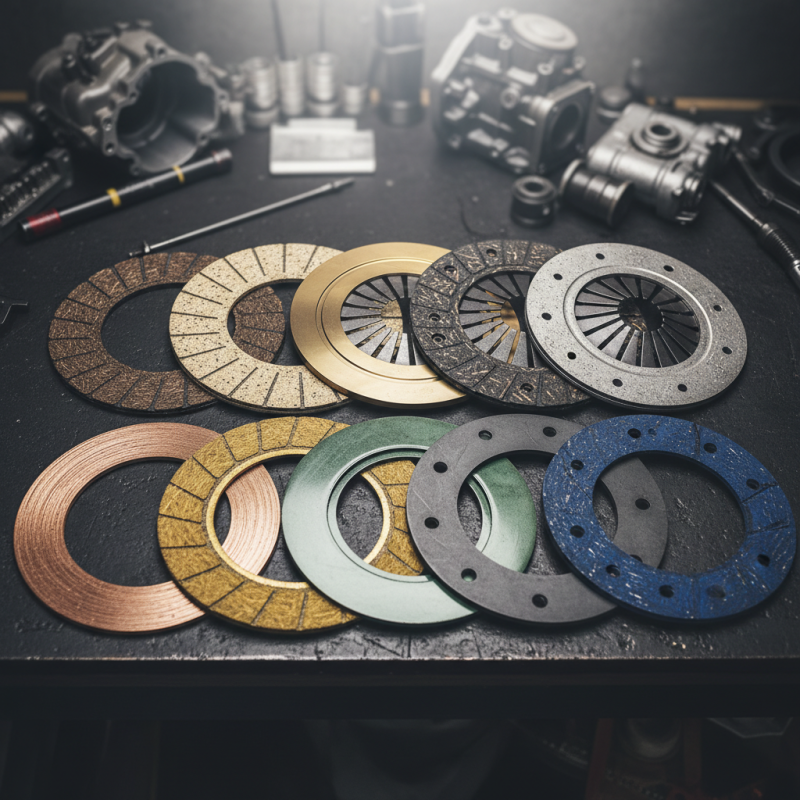
Top 10 Best Materials for Clutch Friction Parts
When it comes to
clutch friction parts, the choice of materials is crucial. The
right materials can lead to improved performance and durability. Common choices include
organic,
ceramic, and
metallic compounds. Each material has its unique properties and applications.
Organic materials, for instance, provide excellent engagement and low noise levels. They can perform well in everyday vehicles, but may
wear out faster under extreme conditions. On the other hand, ceramic materials often offer better heat resistance. They can handle
high-temperature scenarios, yet they may be too abrasive for some flywheels, leading to wear.
Metallic compounds deliver exceptional strength and longevity. However, they can sometimes
cause harsher engagement. The interplay of these materials creates a spectrum of performance characteristics.
Choosing the best option depends on driving style and vehicle usage. It's essential to consider factors like
heat dissipation,
noise, and
wear rates.
Overview of Clutch Friction Materials and Their Importance in Performance
Clutch friction materials play a crucial role in vehicle performance. They transfer power between the engine and transmission. Choosing the right material can significantly impact a vehicle's efficiency and reliability. According to industry reports, the right friction material improves torque capacity by over 30%. This means better acceleration and reduced wear on critical components.
Different materials offer unique benefits and challenges. Organic materials are lightweight and provide smooth engagement but may wear faster under high-stress conditions. On the other hand, ceramic materials excel in heat resistance and longevity. However, they can be harsher on the flywheel. A balanced selection considers both lifespan and performance, impacting overall drive quality.
It’s important to recognize that not every material suits all driving conditions. Some may struggle in extreme temperatures. Others might not deliver the needed performance in heavy-duty applications. Understanding these nuances helps engineers and automotive professionals adapt designs for diverse needs. This approach ensures that the selected materials enhance the vehicle's performance without compromising reliability.
Analysis of Organic Friction Materials: Characteristics and Applications
When considering organic friction materials for clutch components, several characteristics stand out. These materials typically consist of a blend of fibers, fillers, and resins. Their composition allows for high adaptability in various vehicle types. Organic materials tend to provide good initial bite and smooth engagement, making them suitable for daily driving.
However, organic friction materials face challenges. Heat sensitivity can lead to fading under extreme conditions. Their lifespan might be shorter compared to other types. While they excel in noise reduction, some users report a softer feel that lacks the responsiveness of harder materials. It’s important to weigh these pros and cons when making a selection.
Understanding the applications of organic materials is crucial for optimal performance. They are commonly used in passenger vehicles where comfort is prioritized. For performance vehicles, however, alternatives may be more appropriate. Analyzing the driving conditions and requirements can guide the choice of clutch friction material effectively. This analysis promotes informed decisions and enhances vehicle reliability.
Metallic Friction Materials: Advantages and Limitations in Clutch Systems
Metallic friction materials are prominent in clutch systems. They offer significant heat resistance and durability, making them suitable for high-performance vehicles. According to a report by the Society of Automotive Engineers (SAE), metallic friction materials can withstand temperatures exceeding 600 degrees Fahrenheit. This capability enhances their reliability during intense driving conditions.
However, metallic materials come with their own set of challenges. They tend to create higher noise levels compared to organic materials. These increased noise levels can affect the overall driving experience. Additionally, metallic friction materials can cause accelerated wear on the mating surfaces. This can lead to more frequent maintenance, which may negate some of their performance advantages.
Moreover, the weight of metallic friction components can impact vehicle efficiency. A study by the American Society of Mechanical Engineers (ASME) indicates that reducing weight in clutch systems improves fuel economy substantially. While metallic materials boast high performance, engineers must balance durability with weight and noise concerns. Each choice carries implications for vehicle design and user satisfaction.
Top 10 Best Materials for Clutch Friction Parts: Metallic Friction Materials
| Material Type |
Advantages |
Limitations |
Applications |
| Organic Friction Materials |
Good wear resistance and quiet operation. |
Can be less heat resistant. |
Typical in passenger vehicles. |
| Sintered Metallic Materials |
High strength and durability under extreme conditions. |
May cause more noise during operation. |
Used in racing and heavy-duty applications. |
| Semi-Metallic Materials |
Balance of cost, performance, and durability. |
Can produce significant heat and wear on the flywheel. |
Common in many standard applications. |
| Ceramic Friction Materials |
High thermal stability and resistance to fade. |
Higher costs and can be less forgiving. |
High-performance vehicles and motorsports. |
| Cast Iron |
Excellent for heat dissipation and stability. |
Heavyweight and can be brittle. |
Used in heavy machinery and some vehicles. |
| Aluminum Composites |
Lightweight with good wear properties. |
May have lower strength compared to steels. |
Often used in aerospace and automotive sectors. |
| Graphite |
Low friction and good thermal conductivity. |
Can wear down quickly under heavy load. |
Applications requiring low friction surfaces. |
| Carbon-Carbon Composites |
Extremely high-temperature resistance. |
Very expensive and specialized. |
Used in aerospace and advanced racing scenarios. |
| Polymeric Materials |
Lightweight and good vibration dampening. |
Limited temperature resistance. |
Used in low-stress vehicle applications. |
Comparing Sintered Materials: Performance Metrics and Durability Insights
When it comes to clutch friction materials, sintered materials play a crucial role. These materials are made by compacting metal powders under high pressure and heat. The process results in a product that retains unique properties. The performance of sintered materials can vary widely based on their composition and manufacturing technique.
One effective metric to consider is the wear rate. This measures how quickly the material degrades under use. A lower wear rate indicates better durability. Additionally, sintered materials often exhibit high thermal resistance. This is vital in high-performance applications where heat buildup can lead to failure. However, not all sintered materials perform equally in diverse conditions.
Another factor is the friction coefficient. This influences how effectively the clutch engages and disengages. A balance between high friction and low wear is ideal. Remember, while sintered materials offer many advantages, they also come with challenges. Each application demands careful consideration of specific requirements and conditions. Always weigh the pros and cons before selecting a material for clutch components.
Future Trends in Clutch Friction Material Development and Innovations
In recent years, the automotive industry has witnessed a surge in innovation regarding clutch friction materials. Manufacturers are increasingly exploring alternatives to traditional materials to improve performance and durability. Innovations such as organic composites and high-temperature resistant materials are pushing the boundaries of what clutch systems can achieve. These advancements ensure better heat dissipation and reduced wear over time, which can enhance vehicle performance.
However, the journey of developing advanced clutch friction materials is not without challenges. Researchers often struggle to find a balance between cost-effectiveness and high performance. While some materials show promise, they may not be affordable for all consumers. Additionally, the environmental impact of material production remains a critical point of consideration. As we move forward, collaboration between researchers and manufacturers becomes essential to address these concerns.
The future also hints at the potential integration of smart materials that respond to varying conditions. Such innovation could lead to clutches that adapt to driving styles or weather conditions, enhancing overall vehicle efficiency. Yet, the actual implementation of these technologies may take time. It requires extensive testing and validation to ensure reliability and safety in real-world applications. Balancing innovation with practicality is key for future development in this field.
FAQS
: Common materials include organic, ceramic, and metallic compounds, each with unique properties.
Organic materials offer excellent engagement and low noise, suitable for everyday vehicles.
They may wear out quickly in extreme conditions, reducing their lifespan and performance.
Ceramic materials provide better heat resistance and handle high-temperature environments effectively.
They can be too abrasive on flywheels, possibly leading to wear over time.
Metallic compounds are strong and durable, offering longevity in various applications.
They can cause harsher engagement, which may be less smooth compared to other materials.
Sintered materials have unique properties from being compacted, offering varied performance.
Wear rate measures material degradation. A lower wear rate indicates better durability in use.
It affects how effectively the clutch engages and disengages, impacting performance quality.
Conclusion
In the quest for optimal performance in clutch systems, understanding "what materials are best for clutch friction parts" is crucial. This article explores the top ten materials used in clutch friction components, highlighting their significance in enhancing vehicle performance. It begins with an overview of clutch friction materials, detailing their role in effective power transfer and reliability.
The analysis delves into organic friction materials, emphasizing their characteristics and typical applications. Additionally, the advantages and limitations of metallic friction materials are discussed, providing insights into their performance in clutch systems. Sintered materials are also examined for their durability and efficiency metrics. Finally, the article looks ahead to future trends, focusing on innovative developments in clutch friction materials that promise to revolutionize automotive performance.

 Galleo Auto Parts